Sheen and color questions come up on every job. These are plain answers, with notes for Pittsburgh's older houses and grey light.
Price ranges on this page are national figures published by HomeGuide for 2026. They are not our quotes. Local labor, the paint you choose and the condition of your own walls move the number up or down. Last checked October 2026.
What sheen should I use for walls and trim: satin or semi-gloss?
Use a low sheen on walls and a higher sheen on trim. A common set is flat on ceilings, eggshell or matte on walls, and satin or semi-gloss on trim and doors.
For trim, semi-gloss is the classic choice: hard, easy to wipe, and it sets the woodwork apart from the wall. Satin is softer looking and hides flaws better. On old trim with dents and many past layers, satin is often the kinder pick.
Eggshell or satin for living room walls?
Eggshell is the usual choice for living room walls. It has a soft low glow, wipes clean reasonably well and hides small flaws.
Satin is shinier and tougher, and it suits rooms that get handled a lot. It also shows roller marks and wall defects more.
Flat or eggshell to hide bad walls?
Flat hides bad walls best. It does not reflect light, so waves, patches and old repairs are far less visible.
This matters in plaster houses, where few walls are truly flat. Today's better matte paints are washable enough for living rooms and bedrooms. Eggshell is easier to clean but shows more.
What is the best paint for a bathroom or kitchen?
The best paint for a bathroom or kitchen is a quality acrylic made for humid rooms, in satin or a washable matte, with a mildew-resistant finish. Kitchens need a finish that stands up to wiping grease off.
Ceilings above showers need the same moisture-resistant paint, not ordinary flat ceiling paint.
What is the best paint for a high-traffic hallway?
For a busy hallway or stairwell use a scrubbable paint in eggshell or satin. These areas get hands, bags, pets and furniture corners.
A higher grade of paint earns its price here, because it can be washed many times without going shiny or wearing through.
What is the best paint for exterior walls in Pittsburgh's climate?
The best paint for exterior walls here is a 100% acrylic latex. It stays flexible through freezing and thawing, lets a little moisture pass, and resists mildew better than oil paint.
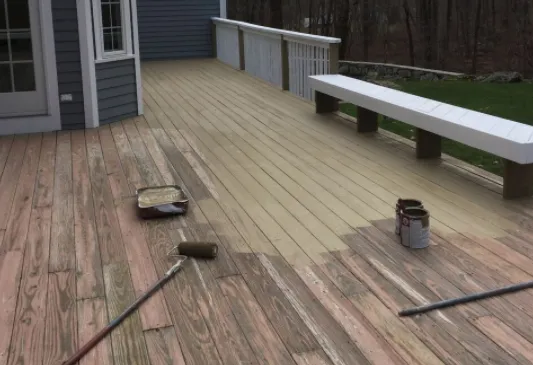
Pittsburgh's weather is wet more than it is sunny: about 40 inches of precipitation and about 44 inches of snow in a normal year. So the paint needs mildew resistance and good adhesion more than extreme sun protection. Bare wood still gets a primer first, and porch floors need a paint made for floors.
Can I use the same paint inside and outside?
No. Do not use interior paint on the exterior, and avoid exterior paint indoors. Interior paint has no defense against rain, sun and temperature swings and fails fast outside.
Exterior paint is made to flex and to resist mildew, and it is not meant for closed rooms. Use each where it belongs.
Does expensive paint last longer than cheap paint?
Yes, usually. Expensive paint has more solids and better resin than cheap paint, so it covers in fewer coats, washes better and lasts longer.
Nationally, paint costs $20 to $80 per gallon. Labor is 70% to 85% of an interior job, so saving a little per gallon risks the larger part of what you pay. Mid to upper grade paint is the sensible buy for most rooms.
Is one paint brand really better than another?
The product line matters more than the brand. Every major brand sells a cheap line and a premium line, and a top line from one brand beats a bottom line from another.
We use quality paints from major brands and choose the product for the surface. If you have a preference, tell us.
How many coats of paint do I need?
How many coats you need is usually two. Two finish coats give even color, full coverage and the durability the paint was designed for.
One coat can work when you repaint in the same color over sound paint. Three can be needed for bright reds and yellows or a strong color change. Our standard is two coats.
How do I cover dark paint with a light color?
Cover dark paint with a coat of primer, tinted grey or toward the new color, then two coats of the light finish. The primer does the hiding so the finish coats can do the color.
Skipping primer usually means a third or fourth finish coat, which costs more than the primer would have.
Why does the same color look different in different rooms?
A color looks different from room to room because the light is different. North rooms get cool, bluish light. South and west rooms get warm light. Lamps, floors and the trees outside the window all tint what you see.
Pittsburgh has many overcast days, and grey daylight makes colors look cooler and darker than on the paint chip. Test large samples on two walls and look at them morning and evening before you decide.
What white will not look yellow?
A white with a neutral or slightly cool base will not look yellow. Whites with cream or beige undertones turn yellow next to cool light and bright white trim.
Compare chips against a sheet of plain white paper to see the undertone. Also know that old oil-based white trim yellows with age, and more so in dark rooms. Repainting it with a waterborne enamel stops that.
How do I pick an exterior color that matches my roof and brick?
Start with what will not change: the roof, the brick and the stone. Choose trim and siding colors that share an undertone with them.
Pittsburgh brick runs red, orange, brown and buff, and each has a warm or cool cast. Hold large samples against the brick in daylight. Cream, deep green, black and warm greys suit most red brick. Stark blue-white trim can look harsh against it. We can help with samples as part of our color consulting.
How much paint do I need?
A gallon covers 300 to 400 square feet with one coat. Measure the wall area, take off doors and windows, double it for two coats and divide by the coverage.
As a national guide for one coat, HomeGuide lists 1 gallon for a bathroom, 2 for an average room and 3 for a large room. Rough or unpainted surfaces drink more. When we do the job, we work out the quantities.
Should the painter supply the paint or should I buy it?
It is usually better to let the painter supply the paint. The painter knows the right product for each surface, buys the right amount and stands behind the result.
If you buy the paint and it runs short or is the wrong type, the job stops. Our quotes include paint and materials. If you want a certain product, tell us and we will price it.
A free estimate and a written quote is the only way to get a real price for your job. Call or text (412) 668-1875.